– On America’s “Kill Line” and China’s Efforts to Prevent it from Kill People
What is the Kill Line and Why it Shocks the Chinese Audience
The term “kill line” originates in competitive online gaming, where it denotes the precise threshold at which a character’s remaining health makes them instantly vulnerable to elimination by a specific skill or attack. Players constantly monitor this invisible boundary, calculating damage and timing to avoid crossing it. The concept is powerful because it turns survival into a matter of numbers and systems rather than luck: once the line is crossed, defeat is no longer a possibility but a certainty. This combination of precision, inevitability, and tension is what gives the term its strong metaphorical appeal beyond gaming.
In recent Chinese public discourse, “kill line” has been borrowed to describe social and economic systems—most often those observed abroad—in which individuals can fall into irreversible crisis once certain conditions are met. Medical emergencies without adequate insurance, sudden job loss in the absence of strong unemployment protection, or unaffordable housing costs are framed as real-world equivalents of crossing a fatal threshold. The metaphor resonates because it portrays vulnerability as structural rather than accidental: people are not ruined by a single bad decision, but by systems that tolerate sharp cutoffs beyond which recovery becomes nearly impossible.
The term’s popularity and shock value among Chinese audiences are closely tied to long-standing domestic narratives about governance and social responsibility. For decades, Chinese official discourse has emphasized social stability, collective security, and the state’s role in preventing extreme individual hardship. Against this backdrop, foreign examples circulating on social media—such as medical bankruptcies in the United States, large-scale homelessness, or instances of police violence—appear especially jarring. The “kill line” metaphor condenses these complex phenomena into a vivid image that suggests a lack of systemic protection, challenging the assumption that modern states should prevent citizens from sudden, catastrophic collapse.
This sense of shock is intensified by comparisons with China’s own social policy trajectory. While widely acknowledged as incomplete and uneven, China’s expanding welfare mechanisms—such as near-universal basic healthcare coverage, minimum livelihood guarantees, and large-scale poverty alleviation programs—have fostered an expectation that extreme destitution should be exceptional rather than routine. When contrasted with narratives of societies where individuals can rapidly fall below a survival threshold, the metaphor of the “kill line” appears both alarming and morally charged. It implies a world in which survival depends on avoiding a single misstep, rather than on collective safeguards.
Ultimately, the term trends in China not only because it is linguistically striking, but because it aligns with a broader moral framework. By framing foreign social risks as “kill lines,” Chinese discourse implicitly affirms the idea that a government’s legitimacy rests on its ability to prevent such thresholds from existing at all. The metaphor shocks because it suggests a form of modern life that feels fundamentally insecure, and it gains traction because it reinforces a deeply rooted belief that no citizen should be left to face a fatal line alone.
An Xiaohongshu Post:
The following text is a translation of a personal reflection originally shared on Xiaohongshu, along with a selection of reader comments. It was written by a poverty alleviation worker stationed in a remote village in Yunnan, who contrasts the noise of online discourse with the grounded reality of rural life. Through detailed observation, the author describes how China’s social support systems—such as the “Five-Guarantees” welfare program, collectively owned land rights, and locally adapted poverty alleviation measures—operate on the ground to protect the most vulnerable. The post is followed by comments from readers across the country, who share their own experiences with medical insurance, educational aid, agricultural procurement, and community care, echoing the author’s message that in times of need, there is a visible safety net in place. Together, the entry and the responses offer an intimate look at the human dimension of social governance in contemporary China.
Lately, I’ve been dipping into clips from a certain livestreamer Lao A (牢A) on Bilibili. Every session leaves me a little more drained, questioning things. But then I step outside, into the rhythm of the village where I work, and something quietly settles inside me again.
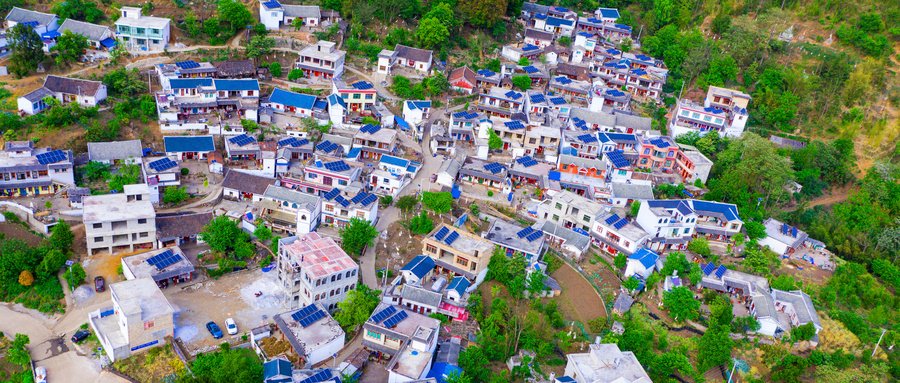
A bit about me: I’m part of a poverty alleviation program, stationed in a small, remote village tucked away in Yunnan, near the border. It takes about three hours by road to reach the nearest county town. Most residents here belong to ethnic minority groups, and incomes are low—very low.
Over time, I’ve come to believe you can tell a lot about a country’s development—and the heart of its governance—by looking at how it treats its most isolated elderly citizens in rural areas.
There’s one man I often think about. He’s in his eighties, has no children, never married, and cannot speak. To many, he might seem like the most vulnerable person here.
And yet.
He lives in a simple, state-built house, equipped with a large government-provided TV. His medical insurance is fully covered every year. When winter comes, I remember the civil affairs bureau delivering thick cotton jackets and quilts meant for households like his—those enrolled in what’s called the “Five-Guarantees” system.
This is China’s social safety net for those who have no income, no ability to work, and no family to rely on. It guarantees food, clothing, housing, medical care, and burial support. For someone like him, it means dignity and security.
As part of this program, he receives around 1,000 yuan per month. In a village like ours, where housing and healthcare are already covered, that sum allows for a stable, modest life. It’s a quiet but powerful sign that he hasn’t been forgotten.
It’s important to note here that in rural China, agricultural land is collectively owned by the village. Farmers don’t own the land privately, but they hold long-term contracted rights to use it. This system is foundational—it means every rural household has access to land for farming or building a home, providing a basic form of economic security and rooting people to their community. For the elderly or vulnerable, this collective right often translates into a small plot they can rely on, or which can be managed on their behalf.
Beyond the “Five-Guarantees” households, there are families living in the grey zone—where parents may be illiterate or unwell, and education often stops after middle school.
In such cases, we encourage younger members to find work in other provinces and help them apply for subsistence allowances. The state even provides travel subsidies for those who migrate for labor.
Not everyone leaves, though. Some choose to stay, working small plots of land, growing rice and corn, raising poultry—enough to get by, but not enough to thrive. Their right to use the land is key; it’s their fallback, their source of basic food and stability.
To help them earn cash, the local government has created community service roles: forest rangers, sanitation workers, village maintenance staff. These jobs bring in a few hundred yuan a month—a meaningful supplement for families on the edge.
Of course, challenges remain. Insurance premiums, for instance, can be a burden. Sometimes, we buy rice or poultry directly from these families—their produce may not sell easily in the market, but it keeps our pantries full and their pockets a little heavier.
Looking ahead, local officials are also testing new crops suited to the region. Sugarcane, for example, is gaining ground—literally. Hundreds of acres are being planted each year, pointing toward a more stable source of income. This kind of development builds on that foundational collective land system, allowing villages to plan and adapt together.
At the end of the day, I’ve seen enough here to say this: the social welfare system in China works—especially for those at the bottom. It isn’t perfect, and progress is often slow. But when crisis hits, whether it’s a harsh winter or a sudden disaster, there is a net in place to catch people before they fall.
All in all, what I’ve witnessed here tells me that the social fabric in our country is woven with care — especially toward those living at its edges. When storms come, whether they arrive from the sky or from life itself, there is a net in place, stitched together by policy and people, meant to hold everyone up. Here in this village, away from the noise of the wider world, that net feels tangible, human, and quietly reliable. It doesn’t solve everything — but it makes sure no one is left behind to fall. And perhaps that, in the end, is what real governance looks like.
Edited today at 00:38 · Yunnan
Selected Comments:
@y Xiaotiandou Children’s Clothing Store
The state has a pro-agriculture policy where state-owned and central enterprises procure agricultural products from specific villages and towns as employee benefits. This is also a great measure.
2 hours ago · Sichuan
@iF
Yes, my mother’s school (in Shanghai) procures its employee benefits from Honghe, Yunnan. Their school has a targeted assistance program there.
1 hour ago · Shanghai
@momo
There are some things we really don’t need to align with international practices. Our country is doing a great job. Our village has a community canteen where the elderly can go to eat at mealtimes. It’s very convenient and affordable. Which other country would do this? I hope our country continues to improve.
1 hour ago · Jiangsu
@audrey
In our district, those over 70 pay three yuan for one meat and one vegetable dish, and those over 80 eat for free.
1 hour ago · Zhejiang
@Lu Yiming (Author)
I feel fortunate to be born in such a country. Without the policy support and assistance provided by the state, there would be very little we could do.
Yesterday at 22:44 · Yunnan
@momo
I’m in a small county town. My mother was hospitalized a few days ago for dizziness. The entire floor was filled with elderly people with headaches or dizziness. Judging by their clothing, many were from rural areas. A patient in the same room was a subsistence allowance recipient and barely paid anything for medical treatment. My mother is a retired worker with very little money in her medical insurance card. Unexpectedly, out of the over 3,000 yuan for hospitalization, 1,900 yuan was reimbursed, and the remaining 1,400 yuan was deducted from her medical insurance card, so she didn’t pay out of pocket. When her card balance ran out, she could even use my medical insurance card. Thirty years ago, I had a village friend who died from diarrhea because they didn’t seek medical treatment. My grandmother put on her burial clothes and drank pesticide to join my grandfather. In just 30 years, the elderly have gone from being afraid to go to the hospital to not fearing it. Our country still has many imperfections, but for this alone, I will always love her.
1 hour ago · Hubei
@swing1224
I also think the state’s medical insurance policy is excellent. My mother was treated for breast cancer five years ago, costing about 150,000 to 160,000 yuan. She only paid a little over 10,000 yuan out of pocket. For our family, not falling into poverty due to illness allowed us to focus our energy and resources on her recovery. I am truly grateful for the state’s policies.
1 hour ago · Yunnan
@A Leaf Knows Autumn
To attract students, my mother’s school sometimes visits nearby rural areas to find families who cannot afford education and helps them apply for financial aid. Once, they found a young girl living with her grandfather. When the granddaughter started school and graduated, the grandfather made sure to personally visit the school to kneel and express his gratitude. Many teachers, including my mother, were moved to tears.
Just now · Shandong
@Passerby A
I won’t complain about high taxes anymore. I see that the taxes are going where they should.
1 hour ago · Gansu
@First Minister Zegelao
Greetings, fellow stationed comrade. I salute you. In the village where I am stationed, in northeastern Sichuan, there are over a hundred households and more than two hundred people receiving subsistence allowances. Each household receives between three to four hundred yuan to one or two thousand yuan. I calculated that the state disburses over three million yuan per year in subsistence allowance funds directly to the villagers’ accounts in our village alone.
1 hour ago · Sichuan
@Lu Yiming (Author)
Thank you to every taxpayer who contributes to the country.
Yesterday at 23:09 · Yunnan
@What I Say Is Right
This is wonderful, truly wonderful. Thank you, country. Thank you, Party. Thank you, China’s good cadres.
4 minutes ago · Anhui
@HT
It’s great to see the rice grains and corn so plump. My sanity is recovering like crazy.
7 hours ago · Singapore
@Lu Yiming (Author)
Speaking of corn, the corn seeds are provided free of charge by the agricultural science station. Every year, there are new varieties of corn for the people to choose from. The farmers who grow the best are rewarded with a thousand yuan in cash. With good varieties and hardworking people, achieving abundant harvests is a given.
Screenshot:
